
A Market That Shapes the Future
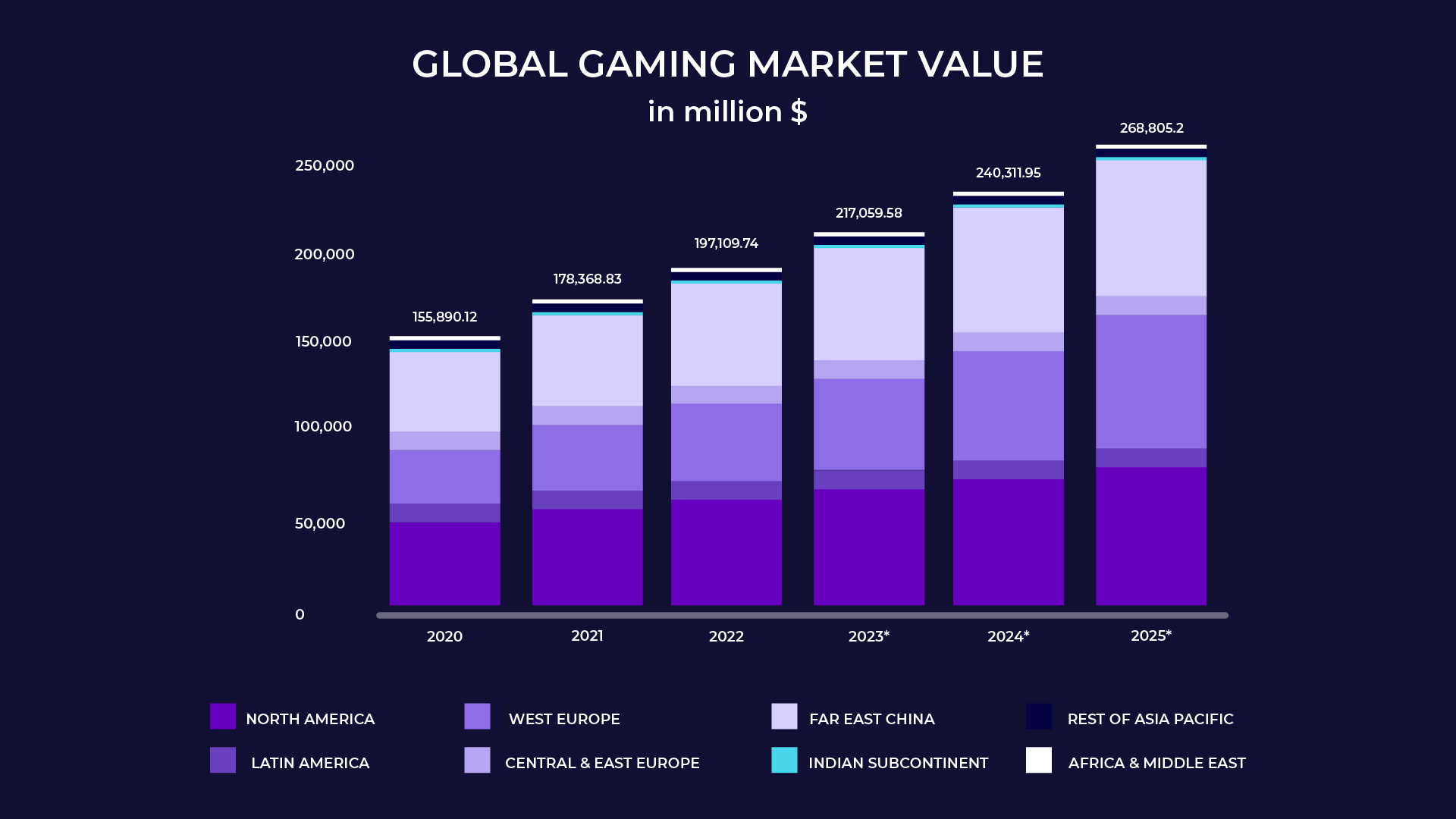
The gaming industry isn’t just entertainment—it’s a cultural force, a technological pioneer, and a trillion-dollar opportunity waiting to be seized. In 2025, the global gaming market is projected to generate $269 billion, growing at a robust 10.37% CAGR to reach $435.44 billion by 2030. This isn’t a market; it’s a movement where players, creators, and investors converge to redefine how we connect, create, and dream. For investors, the question isn’t whether to invest—it’s where to place your stake in a landscape brimming with innovation, community, and untapped potential.
The past two years saw challenges—layoffs, studio closures, and a post-COVID slump—but 2025 marks a turning point. The industry is rebounding, fueled by technological advancements, shifting player behaviors, and a hunger for immersive experiences. Here’s why savvy investors are doubling down on gaming and how they can navigate this dynamic ecosystem to back the next big thing.
Why Gaming is a Must-Invest Sector
Explosive Growth and Resilience
Gaming’s resilience is unmatched. Despite a 2023-2024 slowdown, the market is forecast to soar to $266 billion by 2028, growing at 5% annually. The U.S. dominates with over 74% market share in 2024, driven by streaming platforms and cloud gaming, while Asia-Pacific, with a 13% CAGR, is the fastest-growing region, fueled by smartphone adoption and esports. This global reach makes gaming a diversified bet, spanning regions, platforms, and demographics.
Players aren’t just kids anymore—gamers over 50 are the fastest-growing segment at a 6.7% CAGR, drawn to cognitive and social benefits. From puzzle games to narrative-driven adventures, the industry is expanding to include everyone, everywhere. For investors, this means a broadening audience and stable, long-term revenue streams.
Community-Driven Innovation
Today’s gamers demand more than entertainment—they want to create, connect, and own their experiences. User-generated content (UGC) platforms like Roblox and Fortnite Creative Mode empower players to build their own worlds, with Roblox boasting 97 million daily active users and 668.93 million monthly website visitors. This trend fuels engagement and extends game lifespans, creating predictable revenue through in-game purchases and subscriptions.
Investors can capitalize on studios that prioritize community-driven development. Smaller, agile teams are leveraging player feedback to craft experiences that resonate, often outshining AAA titles. The rise of indie games winning Game of the Year awards over blockbusters shows that players value quality and connection over budget size. Backing studios with strong community engagement—like those active on Discord or Steam forums—offers a low-risk, high-reward path.
Technological Frontiers
Gaming is a hotbed for innovation, incubating technologies that ripple across industries. Artificial intelligence (AI) is transforming development, with 33% of developers using generative AI for art, dialogue, and level design, cutting costs and accelerating production. AI also enhances player retention by predicting churn and tailoring experiences, boosting lifetime value.
Web3 and blockchain are redefining ownership, letting players trade digital assets and participate in decentralized economies. In 2024, 33% of top gaming startups were Web3-focused, doubling from the prior year. Cloud gaming, growing at a 34% CAGR, eliminates hardware barriers, streaming 4K games to any device. These technologies aren’t just trends—they’re reshaping how games are made, played, and monetized, offering investors a chance to back platforms that power the future.
Key Opportunities for Investors
1. Indie and Mid-Sized Studios
Venture capital (VC) is shifting from risky AAA projects to leaner, more sustainable indie and mid-sized studios. In Q3 2023, early-stage and seed deals accounted for over 70% of VC activity, totaling $353 million, as investors seek lower-risk ventures with strong intellectual property (IP). These studios, often built by passionate creators, deliver innovative titles that resonate with niche audiences. For example, survival games with crafting and base-building mechanics are thriving, tapping into players’ desire for creative freedom.
Investment Strategy: Back studios with polished vertical slices, clear monetization plans, and active community engagement. Look for teams leveraging platforms like Steam Early Access or crowdfunding to validate demand before scaling.
2. Mergers and Acquisitions (M&A)
The M&A market remains active, with companies like Tencent and NetEase acquiring studios with strong IP at normalized valuations. The Microsoft-Activision deal in 2023 set a precedent, and more consolidations are expected in 2025 as larger firms scoop up innovative teams. This creates opportunities for investors to fund promising studios early, positioning them for lucrative exits.
Investment Strategy: Target studios with unique IPs or cross-platform potential. Hybrid financing models (debt, shares, cash) are making acquisitions more affordable, so prioritize teams with scalable concepts.
3. Emerging Technologies
AI, Web3, and cloud gaming are attracting significant VC interest. AI startups in gaming raised billions in 2024, while Web3 platforms offering player-owned economies are gaining traction. Cloud gaming, with Microsoft reporting 150 million hours of Xbox cloud play in a single quarter, is expanding access and driving subscriptions.
Investment Strategy: Invest in gametech companies developing AI tools, blockchain platforms, or cloud infrastructure. Firms like Konvoy Ventures and Hiro Capital are leading the charge, focusing on developer tools and immersive technologies.
4. Esports and Content Creation
Esports is a growing ecosystem, with VC funding supporting teams, leagues, and infrastructure. Meanwhile, content creators on platforms like Twitch and YouTube drive game discoverability, amplifying reach. Survival and multiplayer games, with their spectator-friendly dynamics, dominate Steam charts and esports viewership.
Investment Strategy: Fund esports organizations or platforms that empower streamers and community creators. Partnering with content creators in English and Portuguese (Brazil) can tap into diverse markets, especially in regions like Latin America.
Challenges to Navigate
Despite its promise, the gaming industry faces hurdles. Layoffs hit 10,000 jobs in 2024 alone, reflecting a post-COVID correction and investor caution after AAA failures. VC funding slowed in 2023, with deal value down 67.5% year-over-year, though early-stage investments remain strong. Rising development costs—exemplified by debates over $100 price tags for titles like Grand Theft Auto VI—could shrink audiences if not balanced with accessible monetization like subscriptions or free-to-play models.
Investors must also consider regulatory risks, such as data privacy laws in Europe and potential U.S. import tariffs, which could impact hardware and distribution costs. Focusing on sustainable business models, like hybrid monetization or cross-platform releases, can mitigate these risks.
A Call to Invest in the Future
The gaming industry in 2025-2026 is a canvas for visionaries. It’s not about backing games—it’s about investing in worlds where players become creators, technologies reshape industries, and stories live forever. From indie studios crafting the next cult classic to gametech pioneers building AI and Web3 platforms, the opportunities are as vast as the audiences they serve. The market rewards those who bet on passion, innovation, and community.
Ready to shape the future? Dive into the gaming industry—where every investment is a chance to build a legacy. Stay connected with us for the latest insights, and join the movement on Discord to explore the trends driving gaming forward.
Tags: GamingIndustry, SurvivalGames, IndieGaming, GameTech, AIinGaming, Web3Gaming, Esports, CloudGaming, GamingInvestment, M&A